
The Future of Soil Stabilization
Geobag
Product Introduction
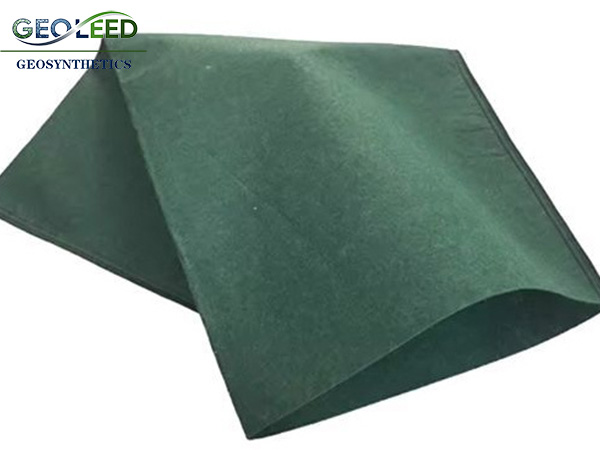
A GEOLEED Geocontainer is a large tubular or bag-shaped container made of high-strength, UV-resistant filament woven geotextile or special composite materials. It is filled with a mixture of mud, sand, and water using a high-pressure pump, utilizing the geotextile’s filtration properties (retaining mud while draining water) to ultimately form a stable, gravity-based geostructure.
Product
Case
Working principle
Workflow: Filling, Dewatering, Consolidation
Filling: Connect the mud pump pipe to the filling port of the bag and add flocculant to aid consolidation.
Dewatering: Water seeps out through the pores of the woven fabric, while solid particles are retained inside the bag.
Consolidation: After multiple filling and dewatering cycles, the density of the material inside the bag increases, its volume decreases, and a solid structure is eventually formed.
The stability of stacked geotextile bags mainly relies on the following physical properties:
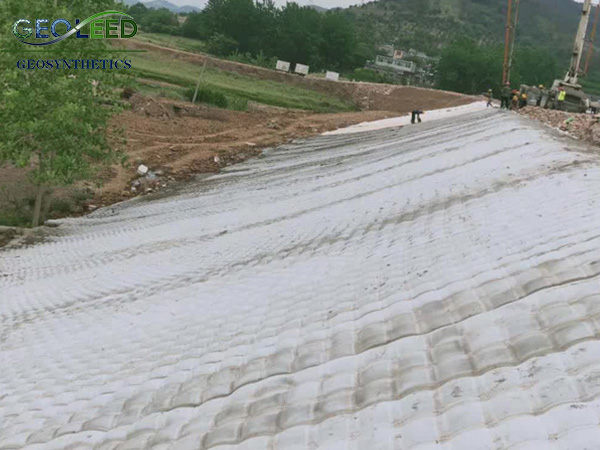
Friction coefficient: There is significant friction between the bags and between the bags and the ground. To increase stability, staggered stacking (similar to bricklaying) is typically used during construction.
Interlocking effect: When the bags are filled to 70%-80% capacity, they deform under pressure, like “gummy candies,” creating a large contact surface. This “interlocking” effect makes them difficult to be swept away by water flow.
Self-weight support: A single filled geotextile bag typically weighs between several hundred kilograms and several tons. This enormous self-weight, combined with gravity, forms a stable retaining wall or breakwater.
APPLICATION
Key Application Scenarios
Coastal Protection and Breakwaters: The bags are filled with sea sand and sunk to serve as the core of breakwaters or for constructing artificial islands.
Urban River Dredging: For sediment pollution, Geocontainers are used for dewatering, significantly reducing transportation and disposal costs.
Tailure Treatment: Dewatering and damming of mining waste.
Emergency Flood Control: During floods, temporary dikes are quickly constructed by filling with locally sourced materials (sand).